
THE CIRCLE OF USEFULNESS
WHEN OTHERS PROSPER, WE PROSPER
Our wellbeing grows when we help create a world in which more people can live with dignity, contribute meaningfully and prosper.
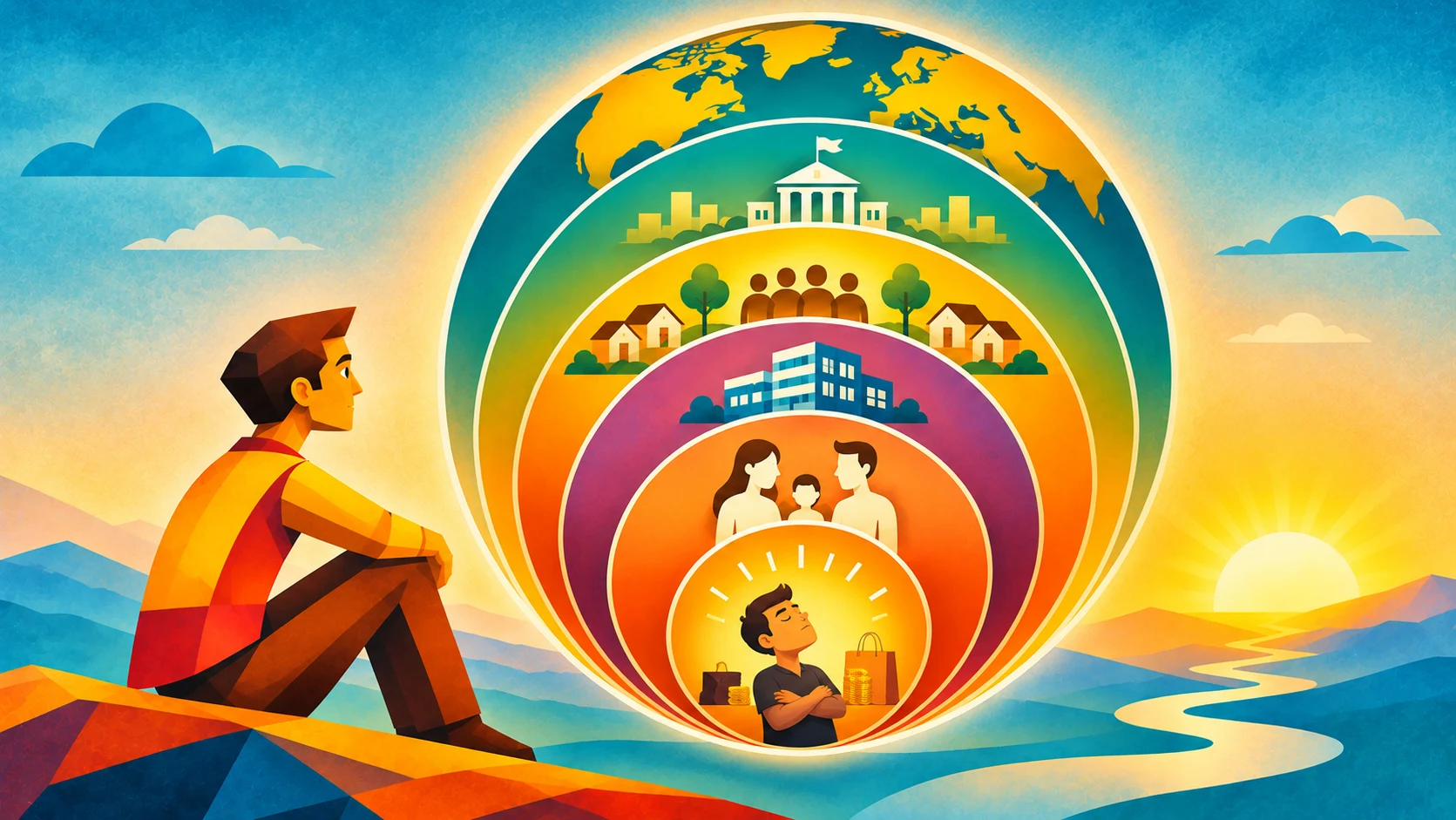
CONCERN AND INFLUENCE
Where can I create genuine value?
The Circle of Influence helps us identify where we can make a difference. The Circle of Usefulness takes this idea further by asking whether that difference creates genuine value.
Not everything we can influence deserves our attention. We may have the ability to gain visibility, pursue promotions or accumulate authority without necessarily developing our capabilities or contributing meaningfully.
The Circle of Usefulness introduces three questions: What matters to me (Concern)? Where can I make a difference (Influence)? Where can I create genuine value (Usefulness)?
EXPANDING RESPONSIBILITY
Six circles of usefulness
- ME
Look after your health and develop a skill you can put to use.
- MY FAMILY
Share the work of caring for a child or an older relative.
- MY ORGANISATION
Pass on a skill that helps a colleague work independently.
- MY COMMUNITY
Bring neighbours together to solve a problem they share.
- MY NATION
Create useful work and widen access to opportunity.
- MY PLANET
Consider what your choices leave for future generations.
PERSONAL GROWTH
BECOME SOMEONE YOU CAN RELY ON
Caring for yourself is part of living with dignity. Your health, attention and time deserve care. So do the abilities you hope to develop. Learning to manage your money, prepare a meal or make a difficult decision can give you more say in how you live.
The smallest circle becomes limiting when every choice ends with “What do I gain?” A second question opens it up. “What am I now able to do for someone else?”
SHARED CARE
NOTICE WHAT YOUR FAMILY CARRIES
Much of the work that holds a family together is easy to miss. Someone remembers appointments, listens to a child’s worries or changes their plans when an older relative needs company. Sharing that responsibility begins with noticing who carries it.
A parent who teaches a child to cook passes on more than a recipe. The child gains independence. Another pair of hands can prepare dinner on a difficult evening. Over time, a person who once depended on care becomes someone who can give it.
CAREER AND CONTRIBUTION
HELP OTHERS DO THEIR BEST WORK
A technician who fixes a recurring fault is useful. When she shows a colleague how she traced the fault, explains why it keeps returning and listens to what the operator has noticed, the whole team becomes better equipped to prevent it.
This is one way to judge your growth at work. Alongside “What can I do well?” ask “Who can now do something they once depended on me to do?” Your contribution can continue long after you have moved to another role.
LOCAL PARTICIPATION
CARE FOR THE COMMUNITY YOU SHARE
Civic sense begins with noticing how your choices affect others. Leaving the footpath clear gives someone using a wheelchair room to pass. Taking your litter home keeps the park clean for the next family. These are small ways to care for people you may never meet.
You can also give your time and share what you know. Help a neighbour fill in a form they find confusing. If a family has just moved in, show them where to find the local clinic. When someone needs a hand, ask what would help and follow through. Your circle of usefulness grows each time you take some responsibility for life beyond your own doorstep.
NATIONAL PROGRESS
CREATE LOCALLY. REACH GLOBAL MARKETS.
A team that designs an affordable irrigation pump for local farmers may find that farmers abroad need it too. By making the pump locally and selling it overseas, the business can create skilled, well-paid jobs at home. Engineers gain design experience, technicians train apprentices and local suppliers can invest in better parts.
Your work can help build a stronger nation when it gives others a chance to learn, earn and create. Opening skilled jobs to people from low-income families is one way to help end poverty. A nation shows good judgement in what it chooses to build, how it uses its resources and how widely it shares the gains.
CARE FOR THE LIVING WORLD
CONSIDER WHO LIVES WITH THE CONSEQUENCES
A stream carries the effects of our choices beyond the place where we make them. A substance washed down a drain here may affect the water a community uses downstream. The people, plants and animals affected have no voice in the original decision.
Widening our circle means learning to include them in our judgement. What will happen to this material after we use it? Can this product be repaired? Will the next generation inherit clean water and healthy soil? Some of our most useful choices benefit lives we will never see.
SHARED PROSPERITY
A rising tide
A family with a secure income may be able to visit a dentist or hire an electrician for a repair it had postponed. Its spending becomes income for someone else.
LOW-INCOME ECONOMY
- Low-value work and insecure incomes
- Limited purchasing power
- Deferred spending on services
- Weak business demand
- Restricted opportunities for growth
PROSPEROUS ECONOMY
- High-value work and dignified incomes
- Greater purchasing power
- Stronger demand for useful services
- Business growth and investment
- More opportunities for productive employment
- Farmers
- Doctors
- Dentists
- Lawyers
- Plumbers
- Electricians
- Entrepreneurs
- Merchants
- Consultants
- Engineers
“A rising tide can lift many boats — when opportunity is broad, growth is inclusive and people can participate in prosperity.”
A GUIDING PRINCIPLE
“Be socially responsible, for your own good.”
EVERYDAY PRACTICE
FROM CONSCIOUS CARE TO SUBCONSCIOUS CARE
- AWARENESS
- DELIBERATE ACTION
- REPEATED PRACTICE
- INTERNALISED CARE
“The highest expression of social responsibility is when care becomes second nature.”